Bring your own telecom: Twilio or Telnyx
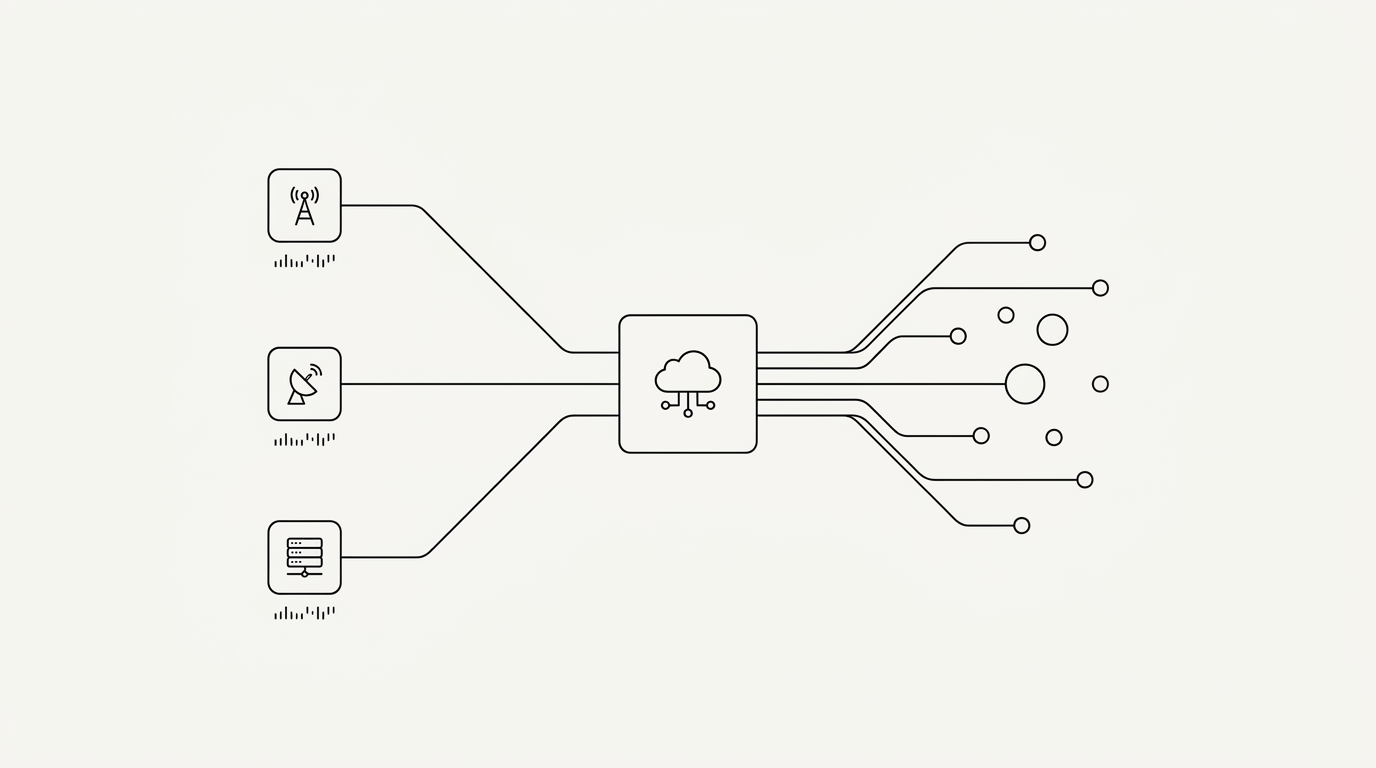
- The bring-your-own-telecom model separates infrastructure (Twilio/Telnyx) from team software — you pay telecom at cost, no reseller markup.
- Telnyx costs roughly half of Twilio; Telnyx is pay-as-you-go, no fixed monthly fee.
- Your number lives on YOUR account, in your name: you can even switch provider without losing it.
Bring-your-own-telecom (BYO) means you connect your own account with a telecom infrastructure provider — Twilio or Telnyx — and a team application plugs in on top. You pay calls and texts directly to the provider, at its rate, with no reseller markup.
It's the opposite of the classic model. An all-in-one app (OpenPhone, RingCentral, Aircall) buys telecom wholesale, adds its margin, and resells the bundle in a per-seat price. You never see the real cost, and your number stays locked with them. BYO breaks that pattern: infrastructure and software become two separate purchases again.
Why separate infrastructure from software?
Because you stop paying twice. With a per-seat app, telecom is buried inside the subscription, with an invisible markup. In BYO, you pay for software on one side (a per-team price) and telecom on the other (your provider's real cost). Every line of your bill becomes readable.
The bring-your-own-telecom model separates two purchases that classic apps bundle: infrastructure (minutes, texts, numbers, paid to a provider like Twilio or Telnyx) and team software (a fixed subscription). The result: no reseller markup on telecom, and a fully traceable bill.
The second gain is ownership. Your number and telecom data live on your provider account, not an editor's. If you change your mind, you unplug the app and keep your number — that's the principle of staying in control of your telephony, which no all-in-one solution offers.
Twilio or Telnyx: which one to choose?
Telnyx has the lower rates of the two, pay-as-you-go with no fixed monthly fee. Twilio is the best known and best documented, and also the priciest. Both connect to Relay the same way, and in both cases the account stays in the customer's name.
- Telnyx — the lower rates of the two, pay-as-you-go with no monthly subscription. The default choice if you are starting from scratch.
- Twilio — the market reference, huge documentation, the broadest ecosystem. Ideal if you already use Twilio elsewhere.
Indicative estimates: Telnyx lists call and SMS rates about 50% below Twilio on the US market (public 2026 rate cards, re-verify for your region and volume).
For a team phone app, choosing a provider comes down to a simple trade-off: Twilio for familiarity and ecosystem, Telnyx for pay-as-you-go with no fixed fee. All three carry the same calls and texts; only the bill changes.
What does it really cost, for a team?
For a 10-person team at average usage, Relay software costs $57/month (Business plan, 8 seats included + 2). Telecom adds on at cost: with Twilio, a few dozen dollars depending on volume; with Telnyx, about half that.
Compare with a per-seat app: at ~$19-40 per person, a 10-person team pays $190 to $400 of software per month — telecom included but with a markup. BYO flips the equation: a low software flat fee (see our per-team pricing), plus transparent telecom. You can estimate your exact total with the savings calculator.
Who BYO is NOT cheapest for: solo with very few calls, an all-in-one app can cost the same. BYO wins once you have a team or volume — and it also gives you ownership of your account.
Do I need to register my business SMS (A2P 10DLC)?
In most cases yes, and not only for the US. Texting a US recipient requires A2P registration without exception; texting a Canadian recipient from a number bought since March 2025 requires registration or identity verification. It is a carrier requirement, not a Relay quirk: it applies whatever your provider (Twilio or Telnyx).
In practice, you register your brand and SMS use cases with your provider, who forwards to the carriers. The process usually takes a few days. Relay guides you step by step. Once set up, you text your clients from the team inbox, at real cost and with no quota.
How do you connect your provider to Relay?
In three steps, about five minutes. You create (or reuse) an account with your provider, paste your credentials into Relay — encrypted with AES-256 and never exposed to the browser — then pick or buy your number. After that, your team calls and texts from the browser.
- Connect your account: paste your SID and key (Twilio or Telnyx). Encrypted at rest, never in clear.
- Pick your number: keep an existing number on your account, or buy one in two clicks.
- Call and text: from any tab. Your team shares the same number.
The key point: at no moment does Relay sit between you and your provider's billing. The telecom bill stays between you and them. Relay is only the software layer that makes that number usable as a team, with BYOK AI and a shared inbox.