
How to forward calls: a guide to miss nothing
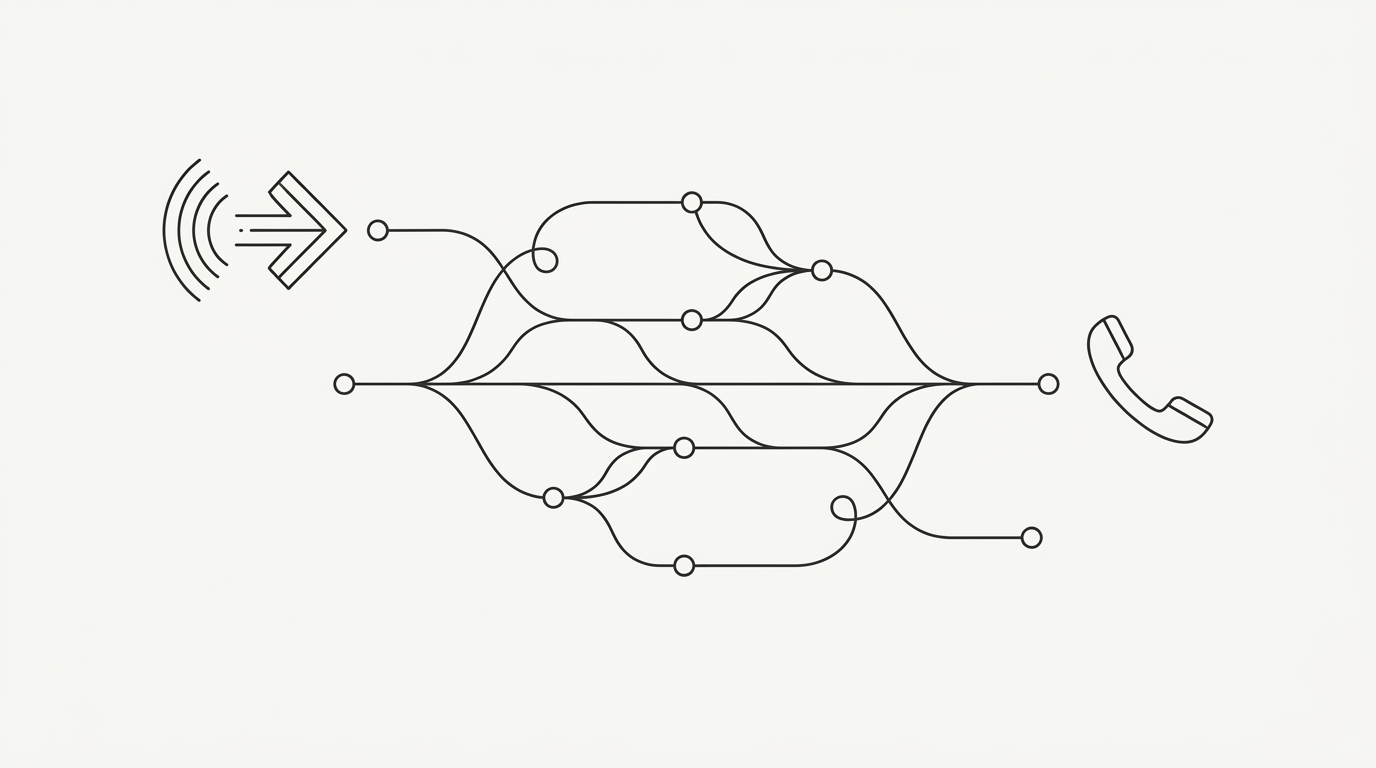
- Call forwarding redirects incoming calls to another number (mobile, colleague, voicemail).
- Sequential forwarding rings several numbers in turn so no one is missed.
- On a business app, a missed call can trigger an automatic text to the client.
Forwarding calls means automatically redirecting incoming calls from one number to another — your mobile, a colleague or voicemail. It's the basics for missing no clients when you're away, on the move or out of the office. Depending on the tool, forwarding can be simple, conditional or sequential.
On a regular mobile, you enable forwarding via a code or settings. On a business phone app, it's more powerful: rules by schedule, cascade, and an automatic text on a missed call.
How to forward calls (mobile and landline)?
On most mobiles, you enable forwarding in call settings, or with a carrier code (often **21*number#). On a landline or business app, you set it in the interface. You choose whether everything is forwarded, or only missed, busy or unreachable calls.
Call forwarding is enabled in the phone settings or via a carrier code on mobile, and in the interface on a business solution. You can forward all calls, or only missed, busy or unreachable ones, to a mobile, a colleague or voicemail.
What is sequential forwarding?
Sequential (cascade) forwarding rings several numbers one after another. If the first doesn't answer within seconds, the call moves to the next, then the next. It's ideal for a team: the call finds someone available instead of going straight to voicemail.
On Relay, call forwarding (simultaneous or sequential) rings the app and your chosen numbers, so your team never misses a lead.
How to never miss a call again?
Combine three settings: sequential forwarding to the right people, transcribed voicemail (to read the message without calling back blind), and an automatic text sent to the caller on a missed call. This trio captures the client even when no one picks up.
Auto-reply on a missed call is a game-changer for a small team: the client gets "Sorry we missed you, we'll call back" within seconds. They wait instead of calling a competitor.
To stop missing calls, combine sequential forwarding (the call seeks an available person), transcribed voicemail (read instead of listen) and SMS auto-reply on a missed call (reassure the caller immediately). These three settings together capture the client even with no live answer.